

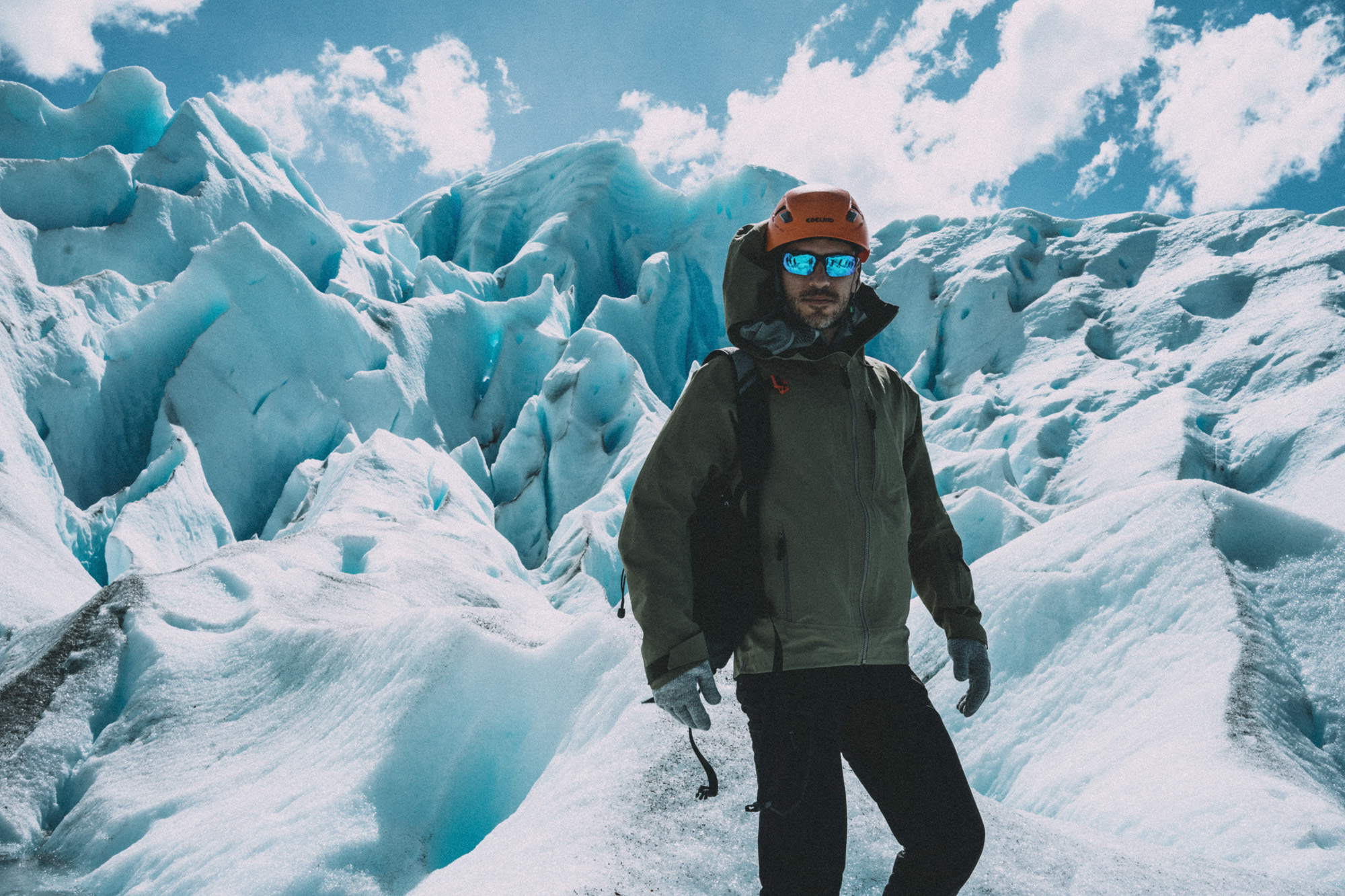
From the moment I knew for sure I was going to Patagonia, Perito Moreno was circled on the calendar as the big day of the trip.
It’s easy to end up disappointed when your expectations are this high for a place you’ve wanted to visit for so long. Not this time, though: Perito Moreno is one of the most beautiful places I have ever seen.
Until very recently, Perito Moreno was one of the few glaciers in the world in a state of equilibrium. Its popularity as a tourist destination, though, clearly comes down to how easy and comfortable it is to see it so close up, thanks to its famous viewing platforms, which put you within a stone’s throw of the glacier’s face.
Until a few years ago, these platforms let you watch one of the greatest natural spectacles in the world: the Perito Moreno rupture, when the ice dam formed by the advancing glacier collapsed as the water wore it away. It was an extraordinary sight for those lucky enough to see it in person.
The latest news suggests that Perito Moreno has joined the long list of the world’s retreating glaciers, and recent photos already show the ice front has pulled back considerably. In fact, the last Perito Moreno ‘rupture’ happened in 2018 and, the way things are going, the future of this phenomenon is highly uncertain, to put it mildly.
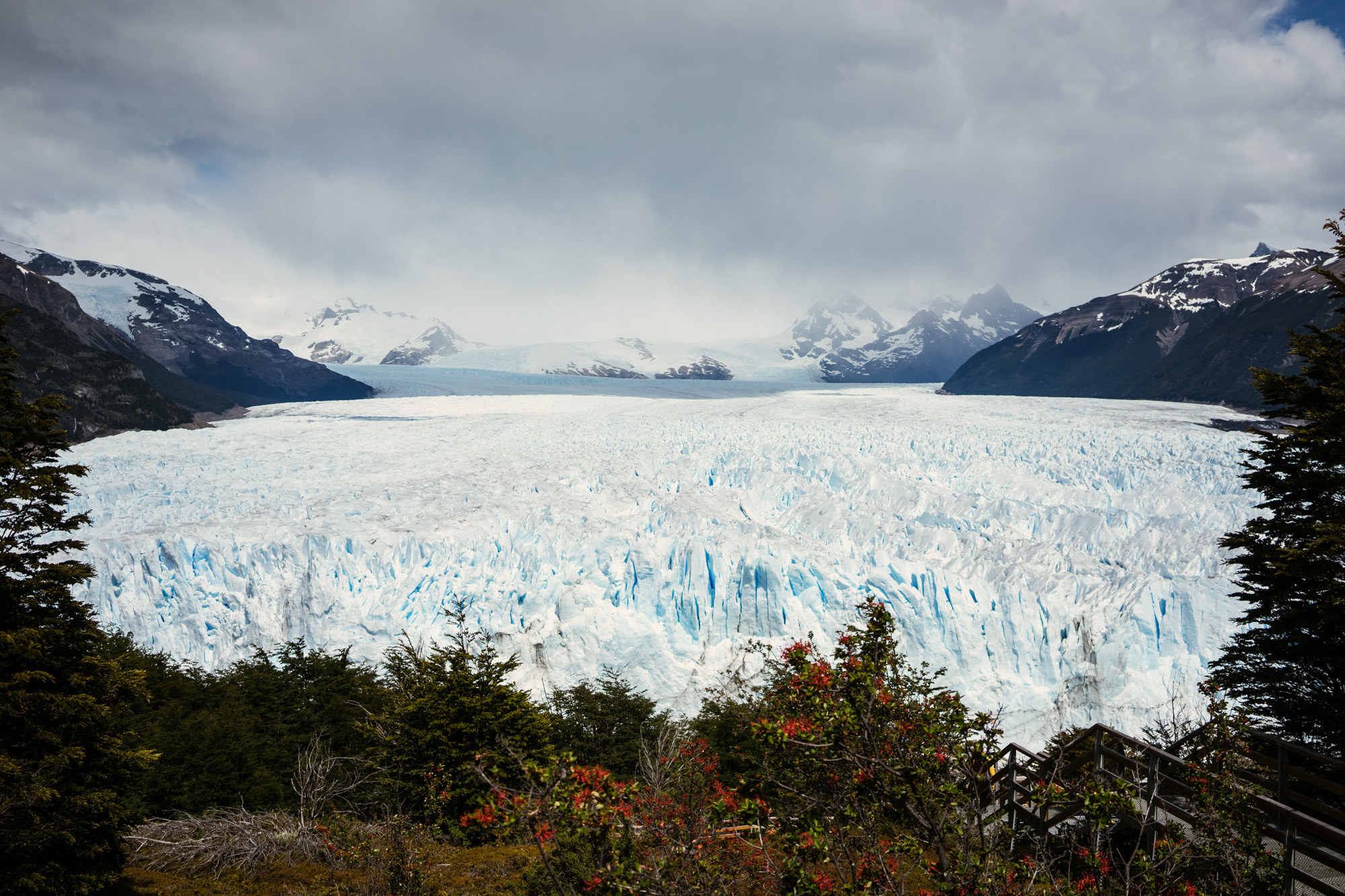
The Perito Moreno boardwalks
Even so, this colossus of ice is still absolutely worth a visit. The ice front may have retreated and another rupture may be unlikely in future, but Perito Moreno is still a colossal glacier that treats you to a majestic view.
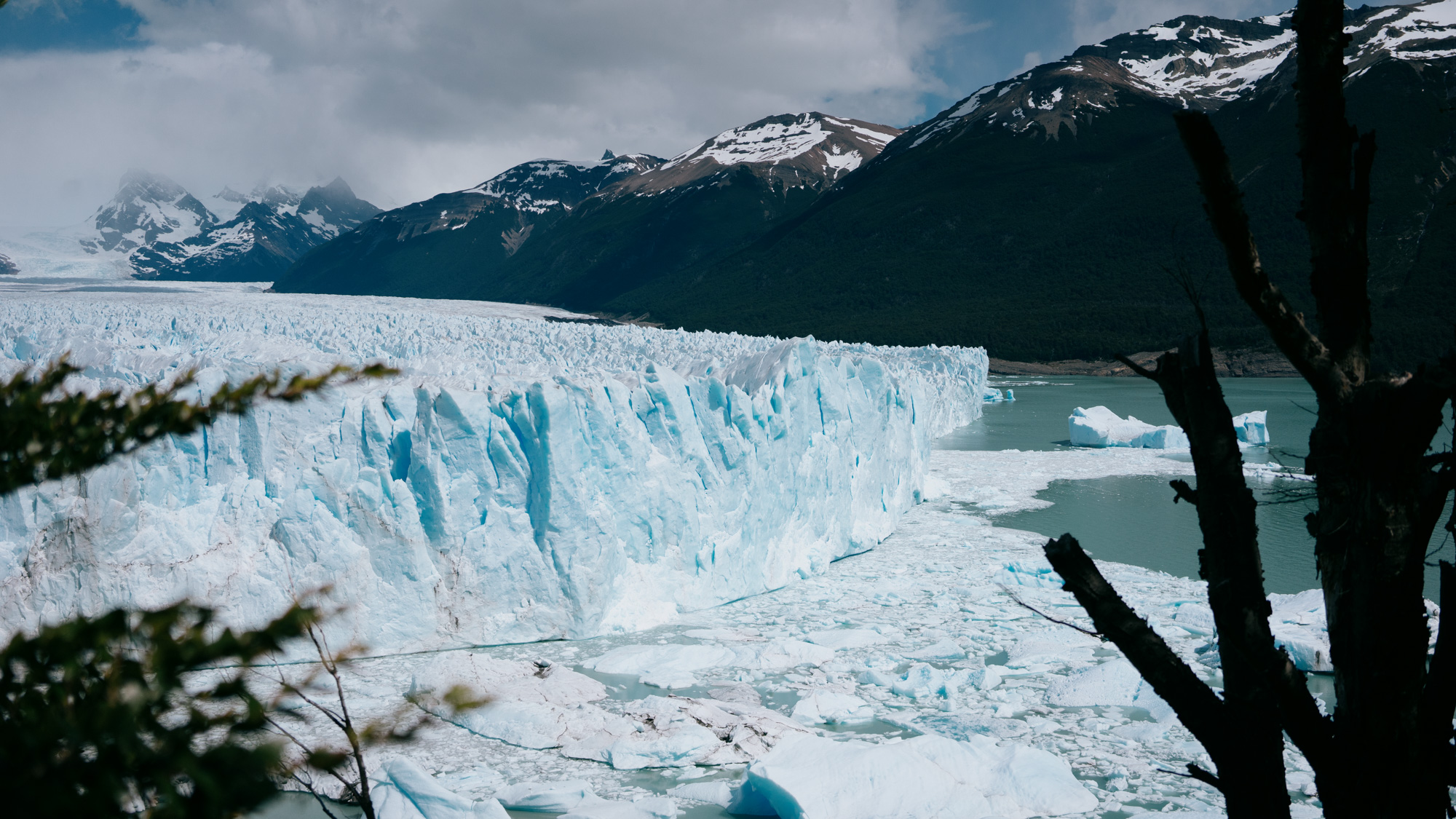
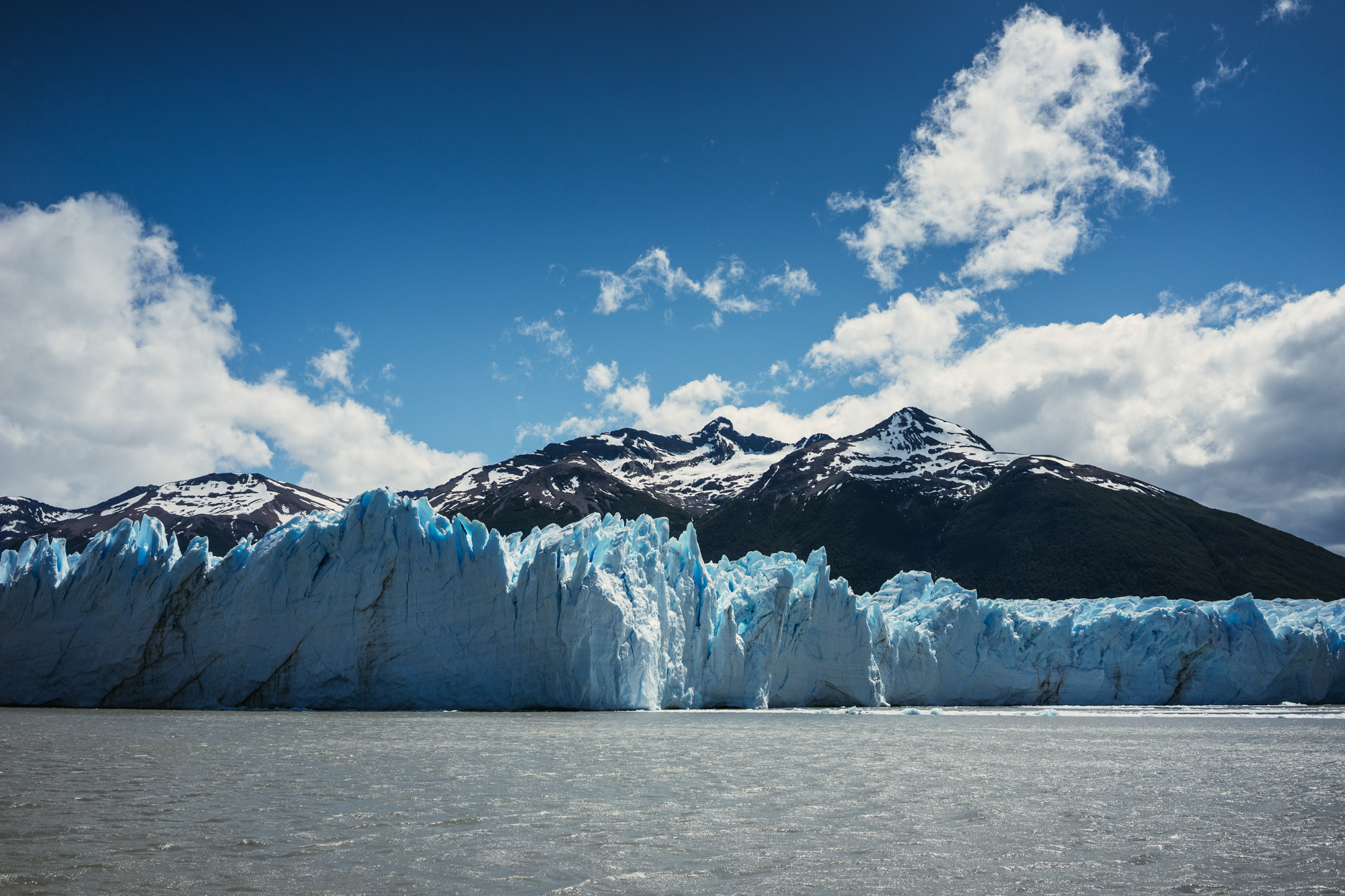
The first comes from what’s known as the Mirador de los Suspiros, as you round a bend on the access road, already inside the national park. The name means ‘viewpoint of sighs’, as if this first glimpse were enough to draw sighs of admiration, and no wonder: even from a distance, that sea of ice is impressive.
But that’s nothing compared with what you see when you reach the first viewpoints next to the visitor centre, where the view is hard to put into words. It really is incredible that young and old alike can stroll so easily between viewpoints that bring you this close to the glacier. You’re close enough to be awestruck by the frequent calving, as blocks of ice, some of them surprisingly large, crash into the water with a thunderous roar.
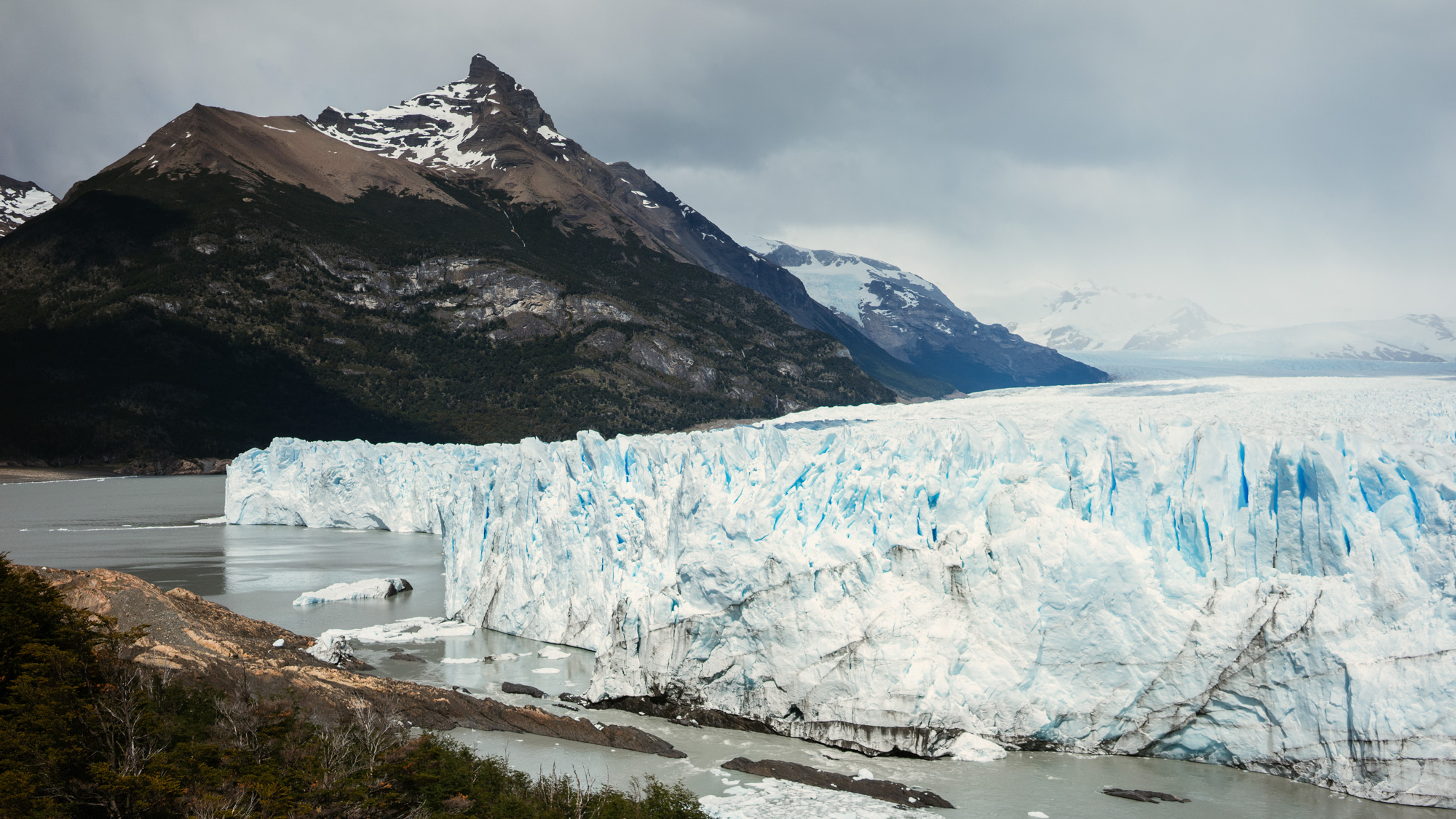
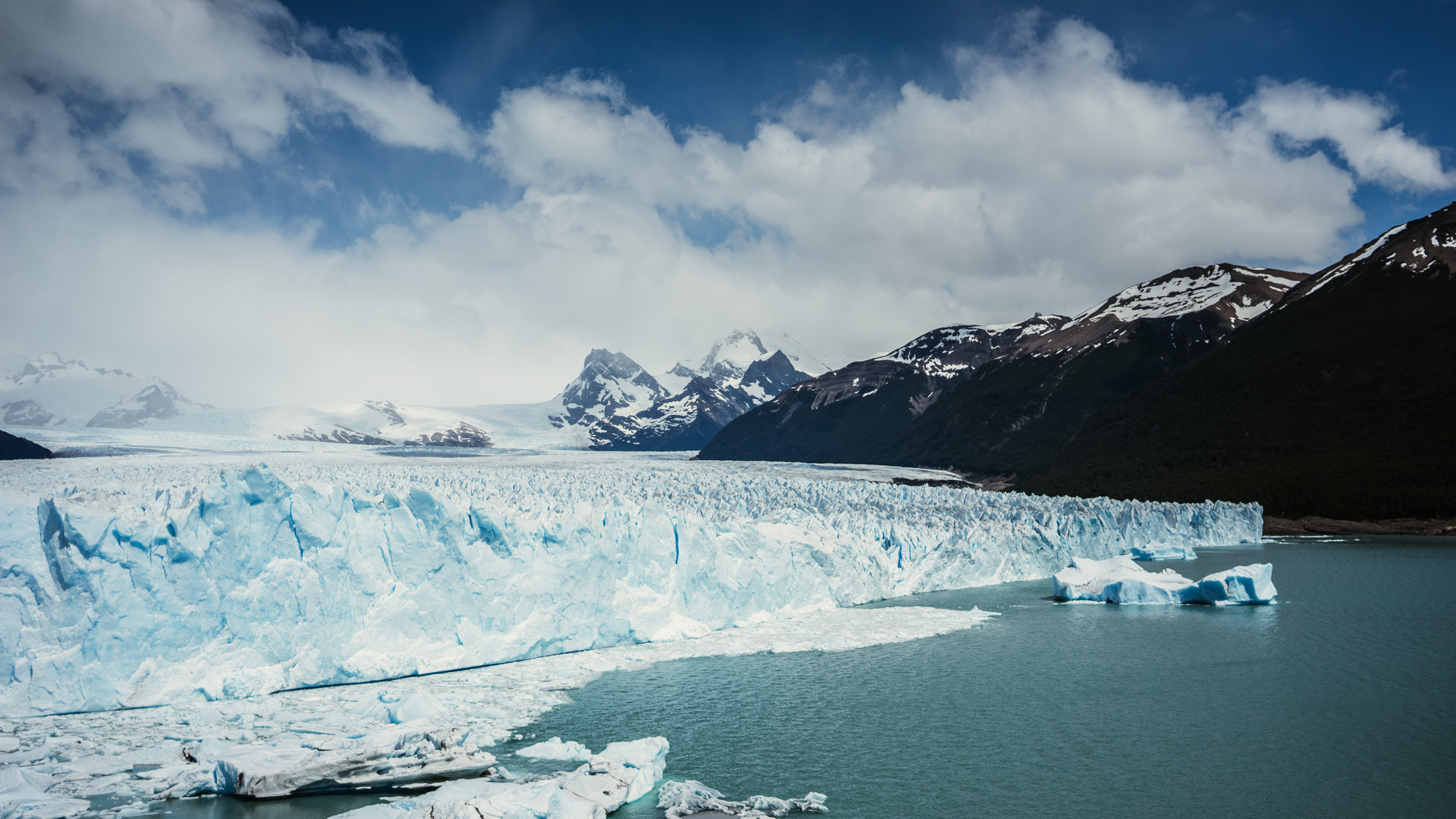
It’s as if nature had made an exception here, letting humans in as privileged guests at a superb display of grandeur. What lies before you is a tongue of ice stretching as far as the eye can see, snowy peaks with forest on their slopes, and weather that changes almost by the minute, as clouds bring an icy drizzle that soon gives way to blazing sunshine. Everything around Perito Moreno has a supreme, superlative, deeply moving beauty.
From the visitor centre, four colour-coded trails head out: green, blue, red and yellow. The central route (yellow) takes in the main viewpoints and is the easiest, as it also has an accessible section – with lifts – for people with limited mobility. It takes an hour to walk.
The forest route (green) is a 45-minute walk that runs a little higher up, so you see the glacier from above. The blue route is longer (an hour and a half) and takes you along the north face of the glacier, beside the Canal de los Témpanos. It’s perhaps the least interesting, because you end up quite far from the glacier, although there are fewer people and you get to enjoy a different landscape.
Finally, the lower route (red) is the most demanding. It takes you along the south face of the glacier, with close-up views of the rupture zone, scene of the extraordinary natural phenomenon I mentioned earlier.
The Mini-Trekking
The second part of the visit is even better. Much better. Now it’s time to walk on the glacier itself. This is what’s known as Mini-Trekking, and there’s a longer (and twice as expensive) version called Big Ice. If you’ve come here under your own steam rather than on the transfer that many tours include, you meet the guides at the visitor centre at the agreed time.
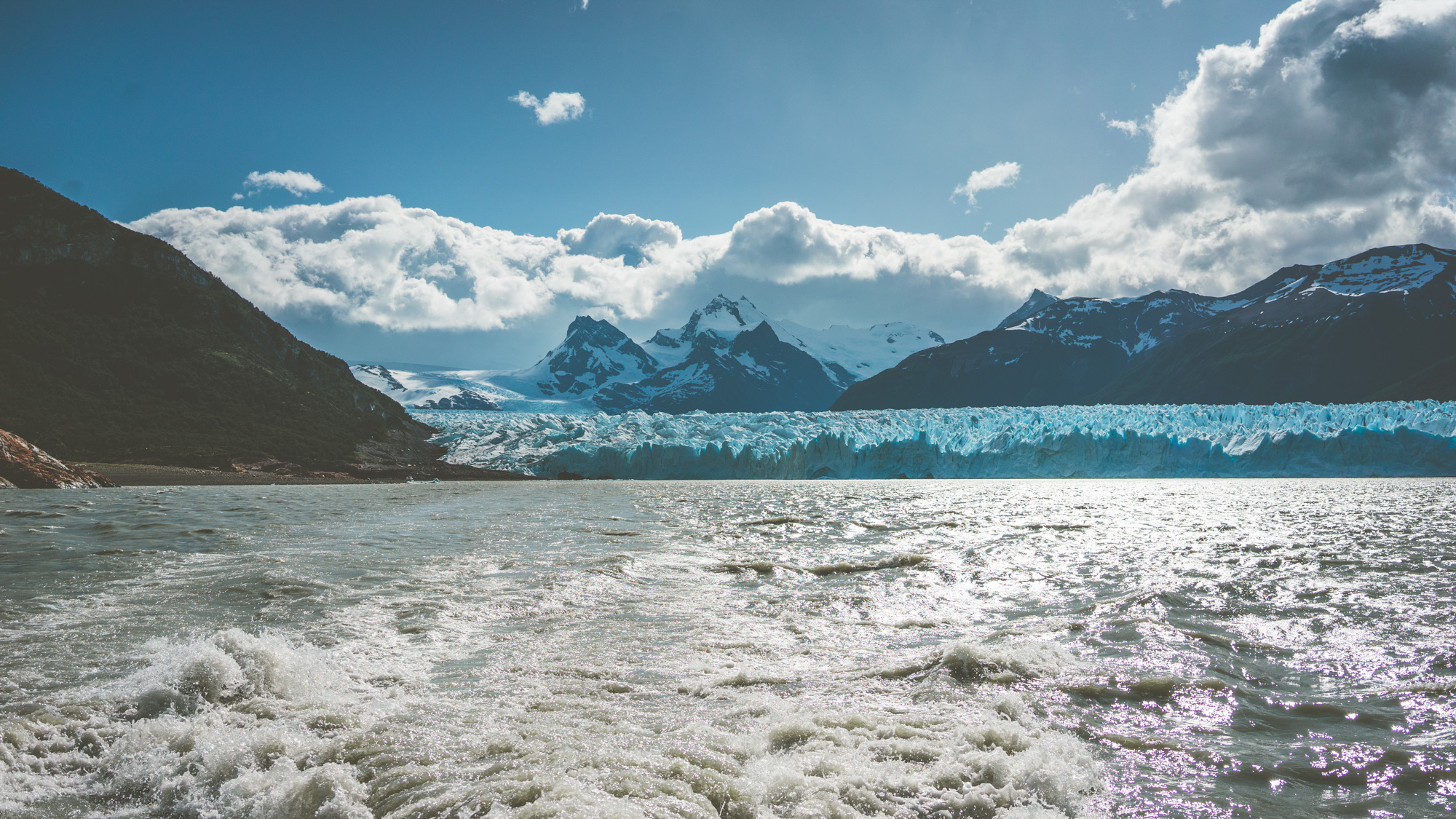
A bus takes us to Puerto Bajo las Sombras, where we board a boat for a 20-minute or so crossing along the south face of the glacier. After landing on the north shore, we follow a short trail to the Buscaini refuge, where we’re split into groups and the guides kit us out with crampons and helmets, along with some basic instructions for walking on the ice in complete safety.
It doesn’t take a genius to guess how extraordinary it is to walk on the ancient ice of a natural giant on this scale. The Mini-Trekking is absolutely incredible, a memory you’ll carry for the rest of your life, and worth every last penny it costs.
Mini-Trekking or Big Ice? Whichever your budget allows. Yes, Big Ice is very, very expensive these days, but if I were going back tomorrow, I’d pay for it without a second thought. The difference isn’t just more time (Mini-Trekking lasts an hour and a half, Big Ice nearly four) but a greater sense of adventure: on Big Ice you spend longer walking through the forest around the glacier (trust me, it’s well worth it) and you head into more remote parts of the ice, where you can see lagoons, sinkholes and caves. The groups are smaller, too.
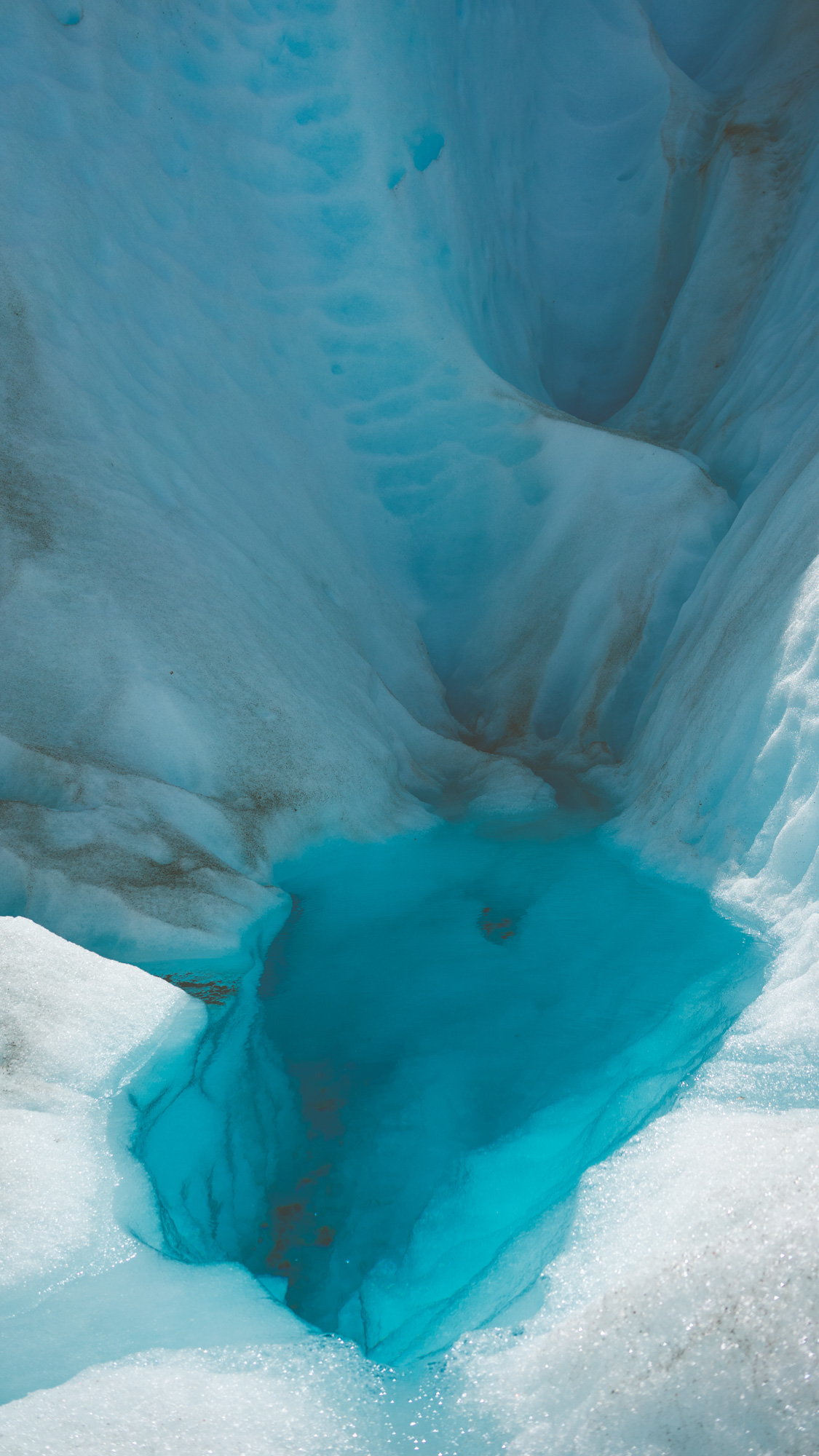
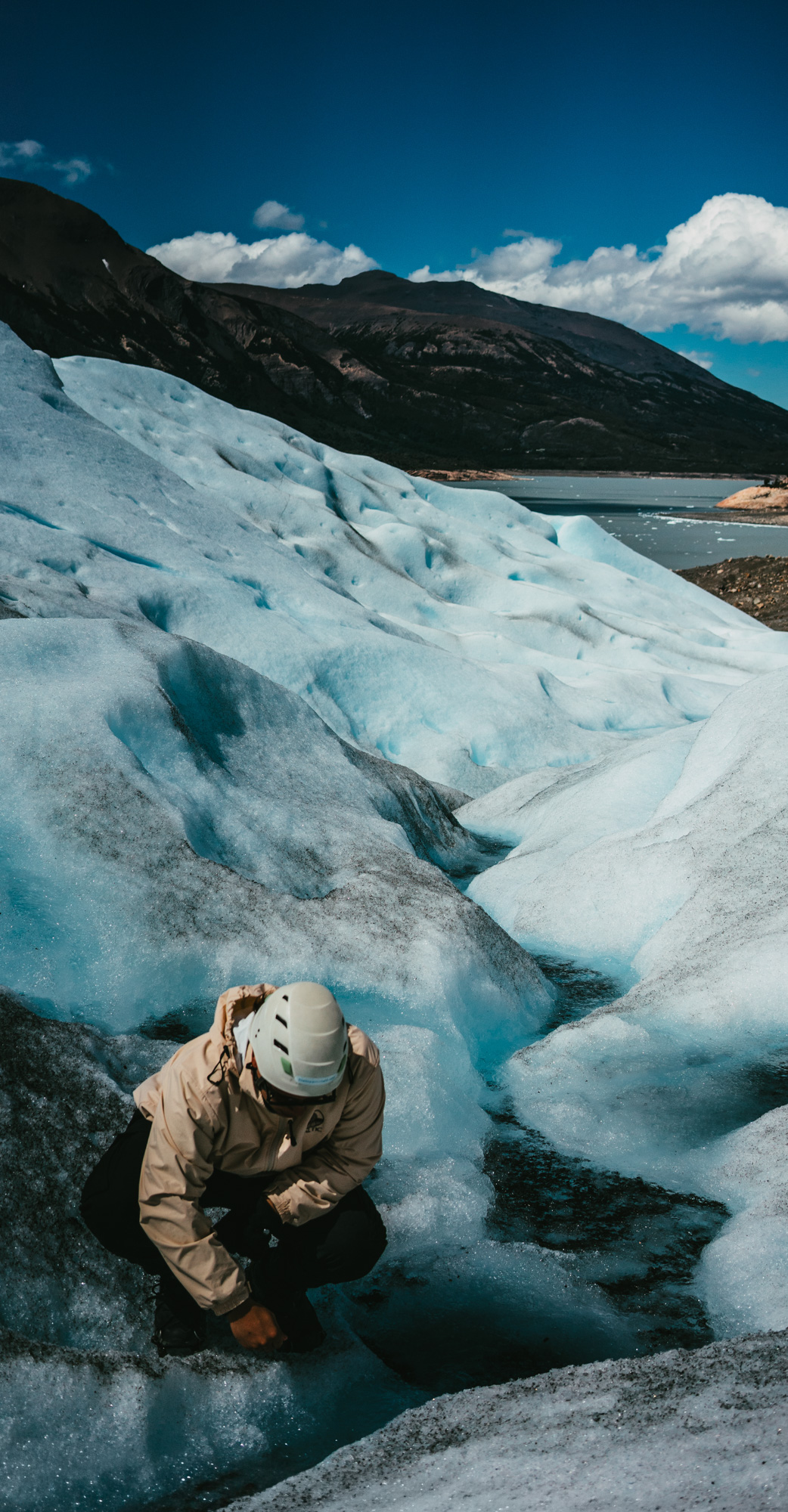
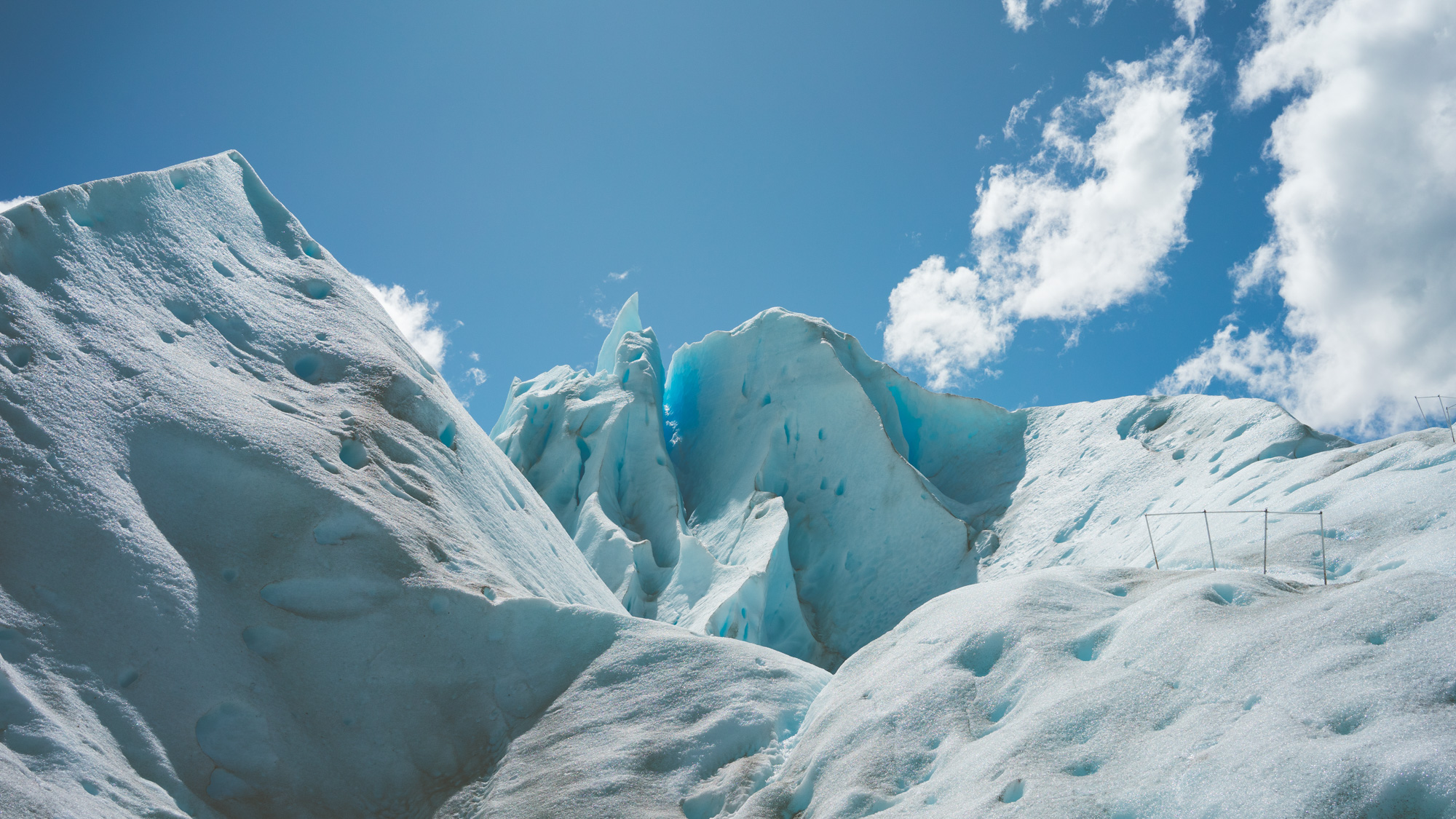
The Mini-Trekking, I’ll say it again, is mind-blowing; it’s just that it can leave you wanting more. If Perito Moreno’s beauty is immense from the boardwalks, seen from its very heart it’s indescribable, in a category of its own. You could happily stay out here all day taking photos, and not just at the few spots where the guides give us time to stop.
The guides have a little ‘surprise’ for us: they tell us we can go into an ice cave, something that’s supposedly reserved for the Big Ice groups. I suspect they say this to everyone and it’s all very much part of the plan. Either way, both the Mini-Trekking and Big Ice end with a ritual: a whisky toast, served over glacier ice, with a chocolate treat on the side.
Once the trek is over, we head back to the refuge, take off our crampons and helmets, have a quick ‘cafecito’ and get back on the boat to Puerto Bajo las Sombras, where the bus is waiting to take us back to El Calafate.
On this last leg, an idea hits me: I need to go on an expedition, sooner rather than later, to the Southern Patagonian Ice Field, one of the last truly wild places on the planet. Stretching more than 350 kilometres from north to south, with around 16,800 square kilometres of ice shared between Chile and Argentina, it is the third-largest continental ice mass in the world, behind only Antarctica and Greenland.
The reason such a monumental expanse of ice exists in this corner of the Earth is just as astonishing. Fierce westerly winds of up to 150 km pick up all the moisture from the Pacific and soon run into the mountain barrier of the Andes: the perfect recipe for that moisture to fall as snow, constantly feeding the ice field. With an average of 5,000 mm of precipitation a year on the ice field, and up to 8,000 mm in the Chilean fjords, the Southern Patagonian Ice Field is one of the wettest regions on the planet. It is this all-but-godforsaken region, with its perpetual ice, that feeds Perito Moreno.
For now, I’ll make do with the memories of an unforgettable day. An icy wind picks up and the cold on deck is brutal. I haven’t even properly said goodbye to Perito Moreno and my eyes are already filling with tears, and it’s not the cold: I’m taking one last look at one of the most beautiful places I have ever seen, and probably ever will see, in my whole life.
A few tips for your visit
The starting point for visiting Perito Moreno is El Calafate, the nearest town to the glacier, which has been devoted to tourism for decades. There isn’t much to the town beyond its huge choice of accommodation and tourist activities, almost all of them linked to the nearby glaciers. You could say El Calafate’s greatest charm is its setting on the shores of Lake Argentino, which stretches from the park all the way to the town and carries meltwater from Perito Moreno and other glaciers in the area, such as the Upsala and Spegazzini.
It’s easy to book the excursion through one of the many agencies selling it in El Calafate, or even directly where you’re staying. You won’t have any trouble booking on the spot in mid or low season either, but it’s a different story in high season (the southern summer), when places fill up fast. From December to February, it’s wise to book your tour well ahead.
The good thing about going with an organised tour is that it includes the transfer from El Calafate, so all you have to worry about is being at the meeting point at the right time. But you can also drive to Perito Moreno yourself and join the Mini-Trekking there. That way you also get more time to explore the boardwalks at your own pace.
Whether you come on an organised tour or independently in a hire car, you’ll have to stop to pay the entrance fee for Los Glaciares National Park. The forward planners among you can buy a pass in advance and lock in the price at the same time, which helps you dodge the notorious inflation that has sadly plagued the country for a long time. Whether you buy your pass on the spot or in advance, the Argentine government lets you re-enter the park at a 50% discount within 48 hours of your first visit. It’s a nice touch, given that there are other glaciers in the area you’ll probably want to see too.

Comments
No comments yet. Will you start?